
Hawksbill Turtle (Penyu Sisik)
Eretmochelys imbricata
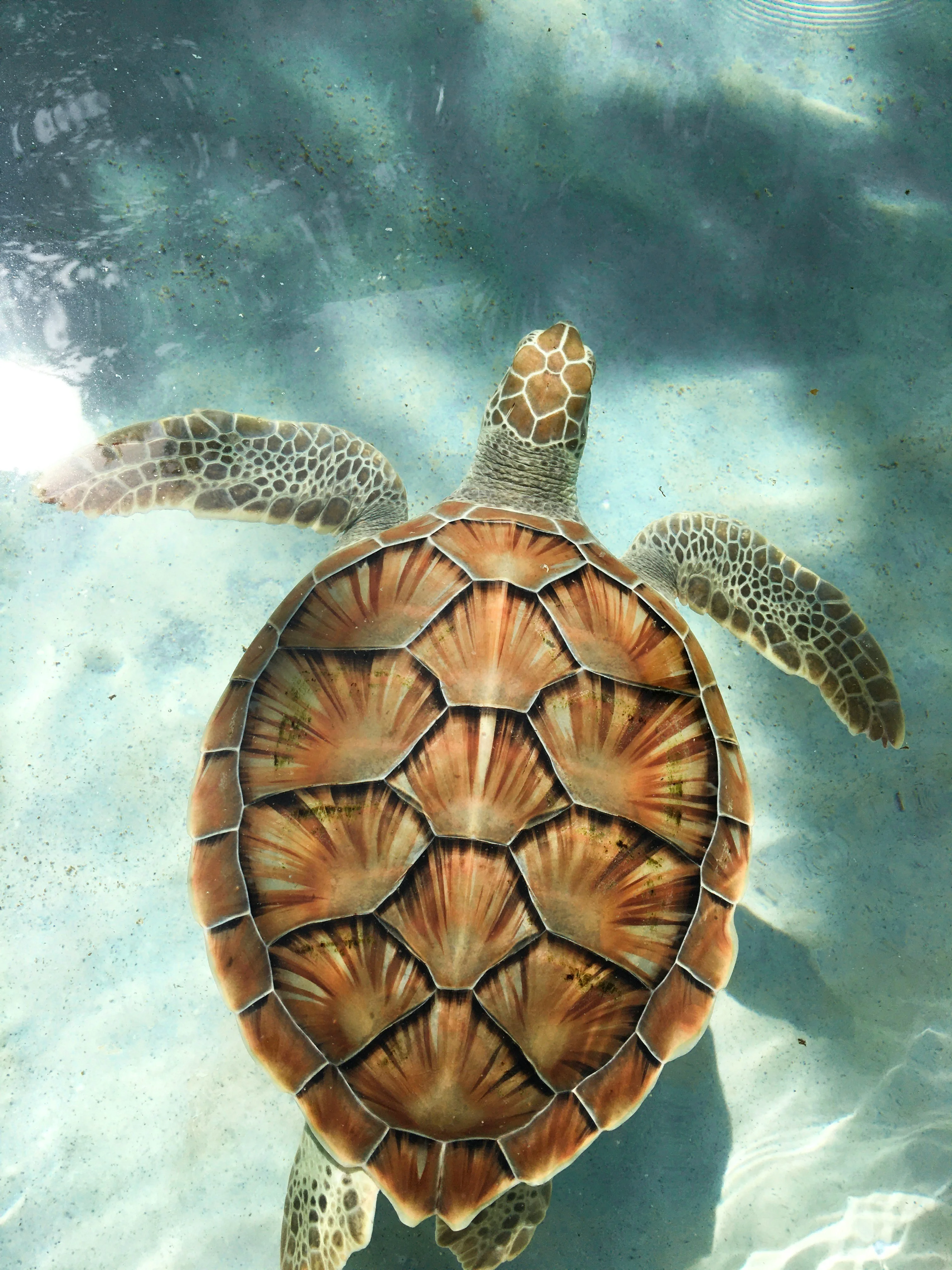
Hawksbill turtles are smaller and more secretive than greens, identifiable by their pointed beak and patterned shell. They navigate tight spaces in reef structure, hunting sponges in crevices and overhangs.
HabitatCoral reefs, rocky reefs, lagoons
DietSea sponges and reef invertebrates
SizeUp to 1.0 meter
BehaviorShy; threads through reefs; often solitary
Where you might see it
Found on healthy coral reefs with complex structure — walls, overhangs, and tight passages where sponges grow. More common at dive sites than shallow snorkel areas due to their preference for deeper reef zones.
How to spot it
Scan coral overhangs and narrow passages for the distinctive pointed beak and amber-brown patterned shell. They move deliberately through reef structure, often pausing to feed in crevices
Responsible Encounter Guidelines
- •Keep distance — they're more skittish than green turtles and retreat quickly.
- •Don't block narrow passages or corners where they forage.
- •Hands off the turtle and the reef structure around it.
- •Control your fins to avoid kicking sediment or damaging coral.
- •No flash photography; observe briefly and move on.
Gallery
Conservation Status
IUCN: Critically Endangered; threatened by illegal shell trade and reef loss.