
Babirusa (Babirusa)
Babyrousa togeanensis

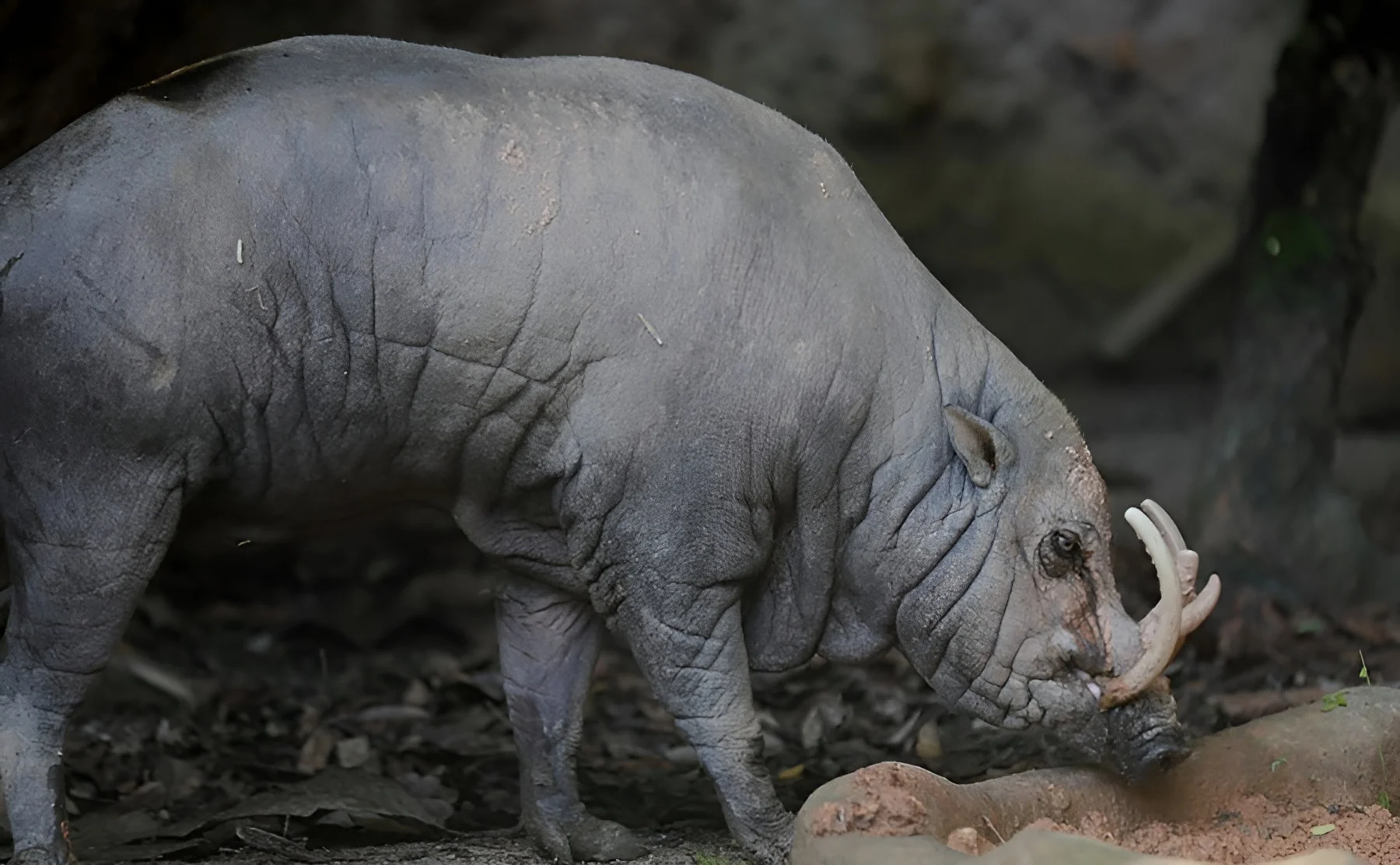
Babyrousa togeanensis are rare, pig-like mammals endemic to the Togean Islands, distinguished by dramatically curved tusks in males that grow upward through the snout. They forage for roots, fallen fruit, and invertebrates in lowland forest and edges, remaining wary and mostly active at dawn and dusk.
Where you might see it
Found only in the Togean archipelago with confirmed populations on Malenge, Batudaka, and Togean islands. They favor lowland forest near water sources and muddy wallows. Sightings are extremely rare — tracks, rooting signs, and wallows are more commonly encountered than the animals themselves.
How to spot it
Search for fresh tracks in mud near forest streams and wallows, plus rooting disturbance where they've dug for food. Actual sightings require patience — dawn and dusk quiet sits near known activity areas offer the best chance. Move slowly and scan forest edges where they emerge to forage.
Responsible Encounter Guidelines
- •Maintain at least 20 meters distance if you encounter one — they're powerful and unpredictable when cornered.
- •Never block their path on narrow trails — give them space to retreat into forest.
- •No baiting, feeding, or attempting to attract them with food or calls.
- •Follow community access rules — some forest areas are off-limits to protect populations.
- •Use local guides who know current activity areas and can read signs properly.
Gallery

Conservation Status
IUCN Endangered; protected; threatened by hunting and habitat loss.