
Seahorse (Kuda Laut)
Hippocampus spp.
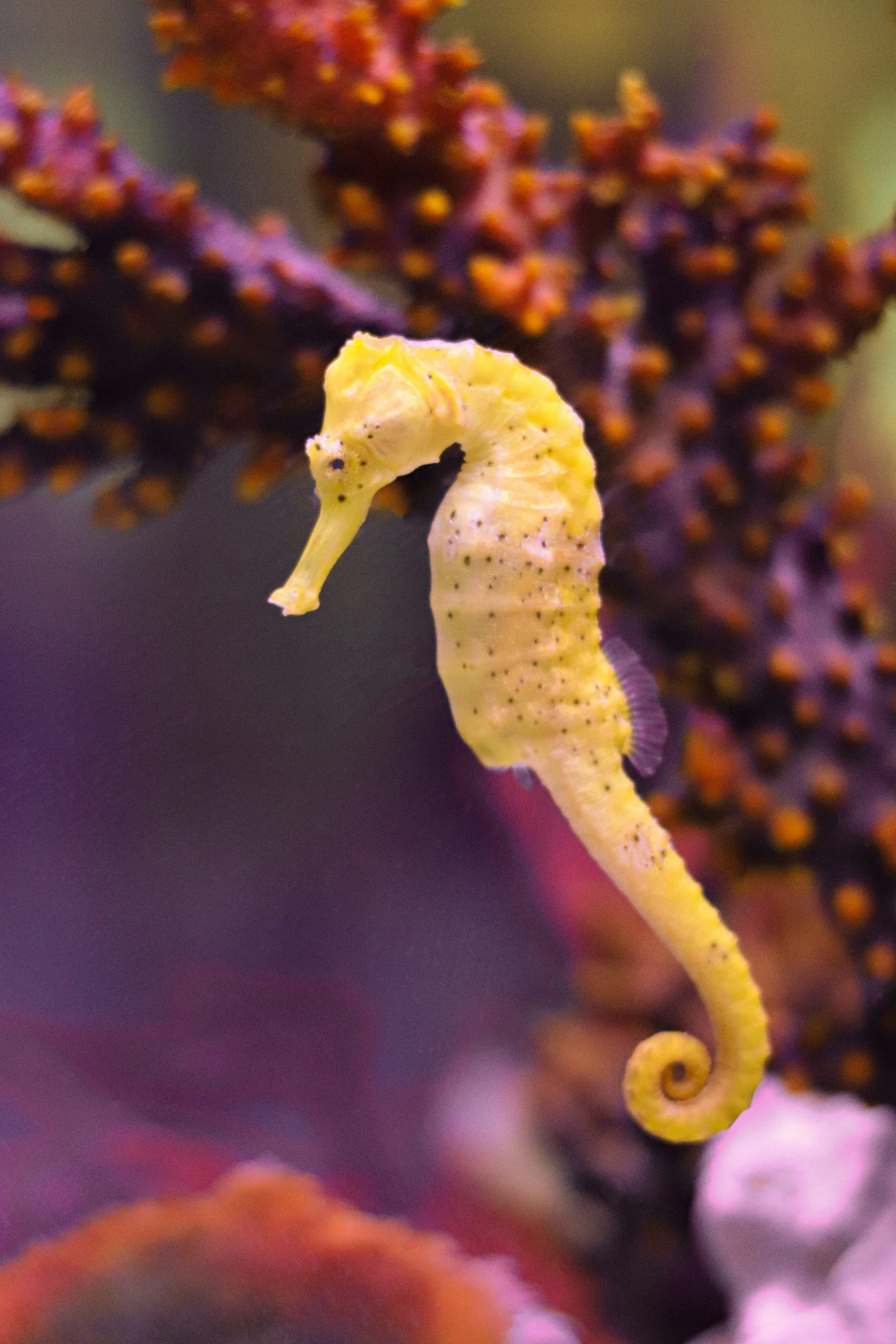
Seahorses are masters of camouflage — tiny fish that anchor themselves to seagrass, sponges, and coral branches using their prehensile tails. They're ambush predators, sitting motionless except for subtle eye movements as they wait for small crustaceans to drift past.
Where you might see it
Found in protected shallows with seagrass, sponges, or soft coral — typically 2-6 meters deep. Check calm lagoons, mangrove edges, and reef patches with complex structure. They prefer areas with minimal current where they can anchor and hunt.
How to spot it
Move slowly and scan seagrass blades, sponge branches, and coral for small, textured shapes that don't quite match their surroundings. Look for the distinctive curved profile or the slight rotation of an eye. They're often smaller than you expect — many species under 10cm.
Responsible Encounter Guidelines
- •Never touch them — they're extremely fragile and stress disrupts their feeding.
- •Control your fins to avoid kicking up sediment that clouds the water or settles on them.
- •Skip the flash at close range — it disorients them.
- •Don't move seagrass or sponges to get a better view — let them stay hidden if they choose.
- •Observe briefly and move on — prolonged attention stresses them.
Gallery
Conservation Status
Togean endemic Walea pygmy seahorse is Critically Endangered (IUCN 3.1). All seahorses are CITES Appendix II.