
Coconut Crab (Kepiting Kenari)
Birgus latro
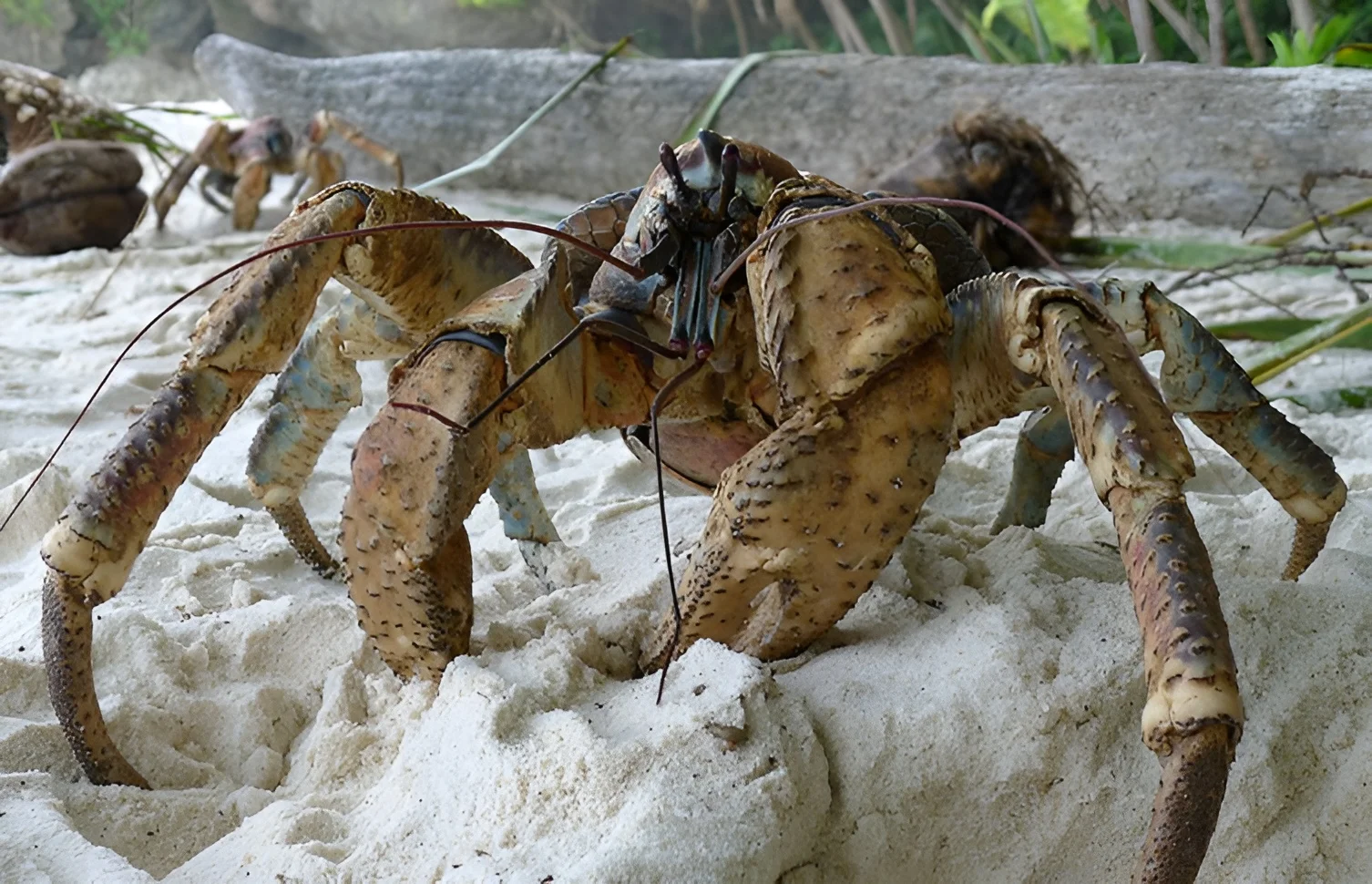
Birgus latro are the world's largest land arthropods, nocturnal crustaceans that spend their lives in coastal forest rather than water. Despite their name, they primarily eat fallen fruit, nuts, seeds, and carrion, using powerful claws to crack open food and drag items back to their burrows.
Where you might see it
Found on remote small islands with intact coastal forest, particularly rocky islets with minimal human presence. They emerge at night near fallen fruit trees, rocky shores, and forest edges. Daytime sightings are rare — they retreat to burrows or rock crevices when the sun rises.
How to spot it
Use red light on night walks through coastal forest and scan the ground near tree roots, burrow entrances, and rocky areas. Look for large, dark shapes moving slowly across the forest floor or climbing low on tree trunks. Listen for rustling and the sound of shells scraping against rock or wood.
Responsible Encounter Guidelines
- •Never touch them — their claws can crush bone and they don't release easily.
- •No feeding or baiting with coconuts or other food — it alters natural foraging patterns.
- •Keep lights dim and use red filters to minimize disturbance during observation.
- •Don't block burrow entrances or disturb their daytime hiding spots in rocks and roots.
- •Never collect them — they're vulnerable to overharvesting and slow to reproduce.
Gallery
Conservation Status
IUCN Vulnerable; threatened by harvesting and habitat loss.