
Giant Clam (Kima)
Tridacna spp.
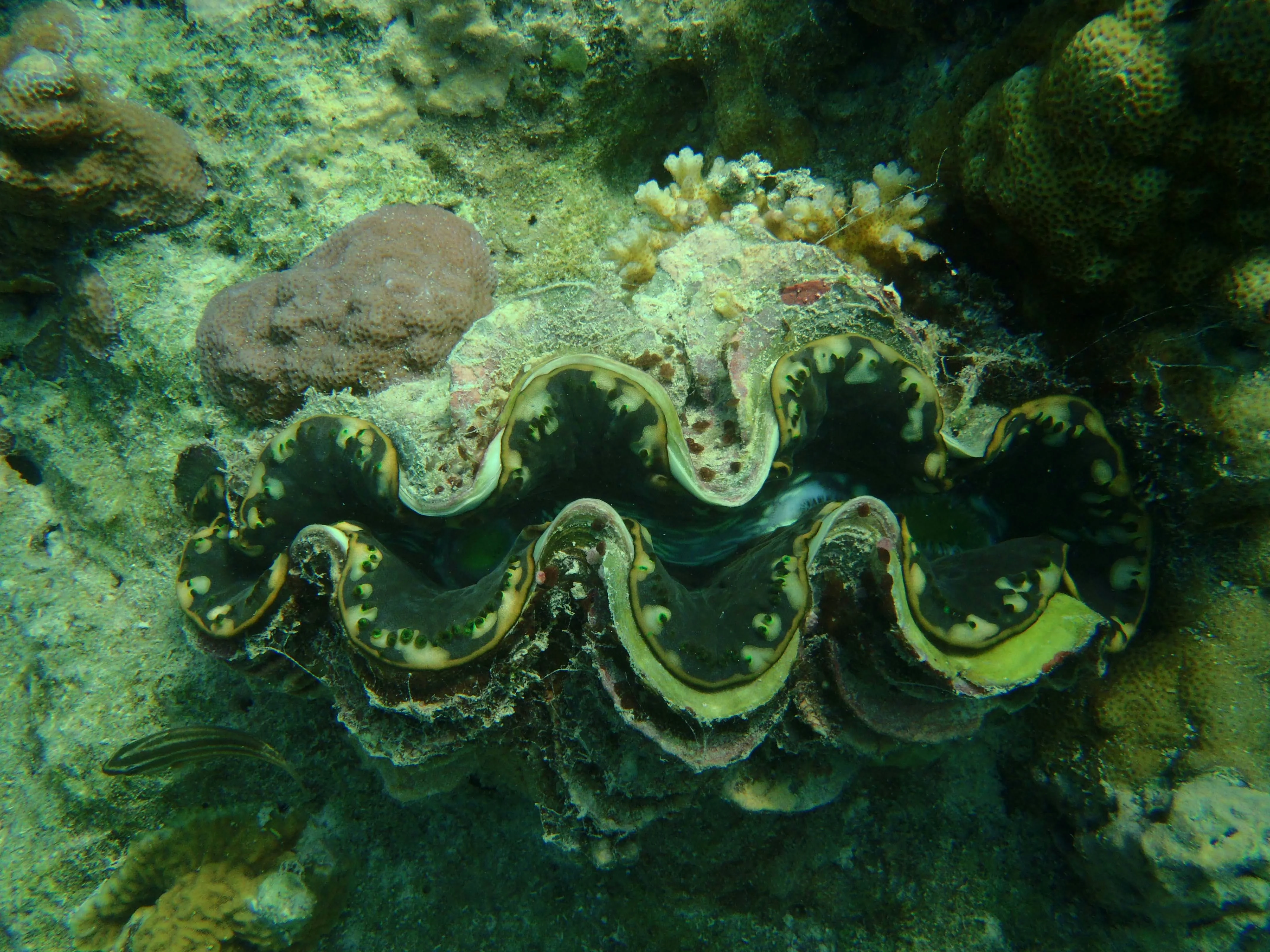
Giant clams are among the most visually striking creatures on shallow reefs — massive bivalves embedded in coral rock with vibrant, wavy mantles in blues, greens, and purples. They filter-feed and host symbiotic algae in their tissue, keeping their mantles open to sunlight.
Where you might see it
Found in shallow coral gardens and reef flats where sunlight reaches the bottom, typically 1-8 meters deep. Look for them embedded in coral bommies or nestled into reef structure — the bright mantles stand out against coral and rock.
How to spot it
Scan shallow reef areas for thick, scalloped shells with colorful tissue exposed. The mantle pulses gently and will close if you approach too quickly or cast a sudden shadow. Move slowly and they'll stay open for observation.
Responsible Encounter Guidelines
- •Never touch the mantle — contact stresses them and can cause permanent damage.
- •Stay off the reef to photograph — don't stand on coral for a better angle.
- •Leave them where they are — they're protected and slow-growing.
- •Keep your fins controlled to avoid stirring sediment that settles on their tissue.
Gallery
Conservation Status
Some species Critically Endangered due to overharvest and habitat decline.